0
0,00 € 0 items

No products in the basket.

Practical guide · Boccia

Choosing your
boccia balls.

The Actinomie guide to putting together your first set.

New to boccia?
A set in a single hardness is ideal for building experience.

Already playing and comfortable using several hardnesses?
Follow our six pointers to build your set, pair by pair.
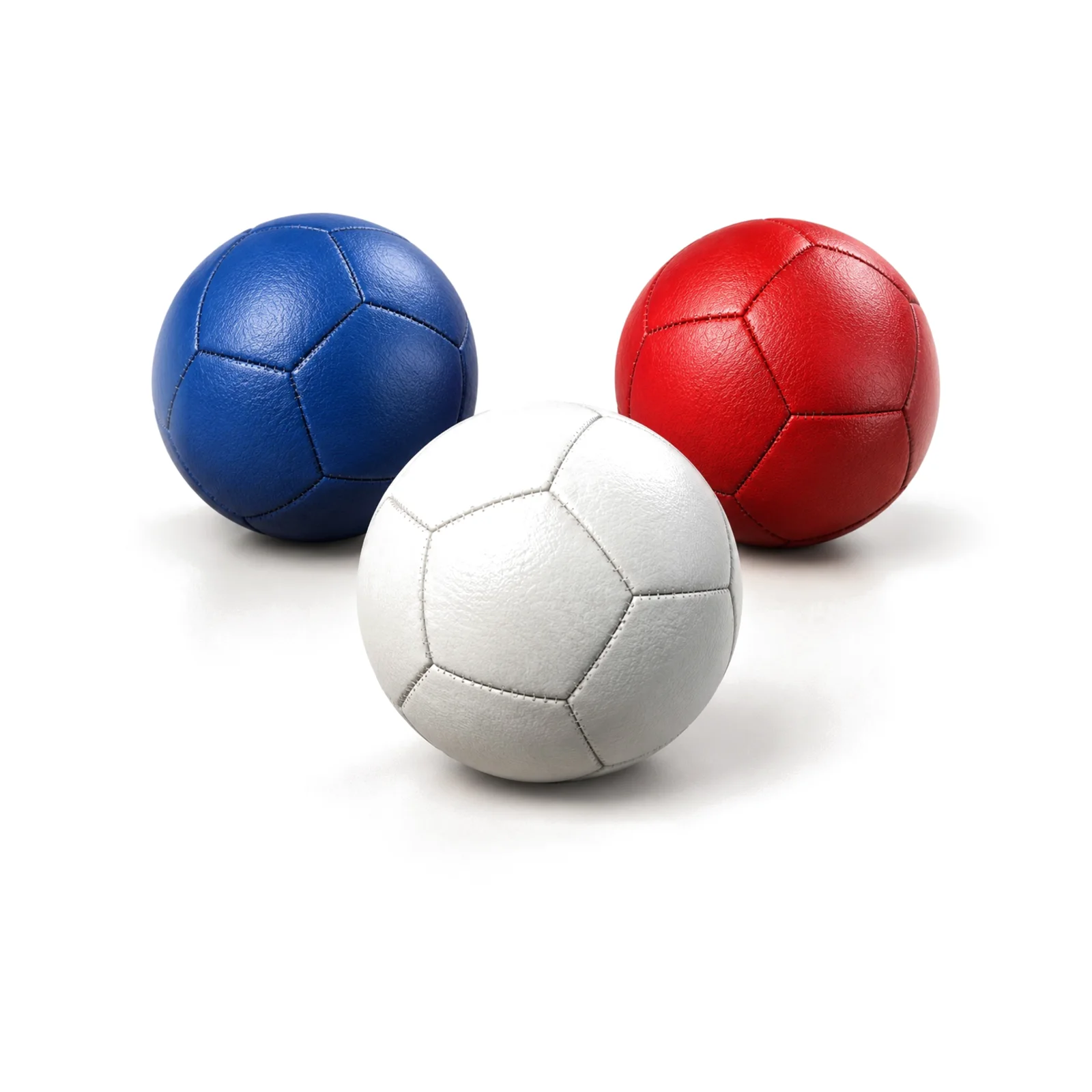
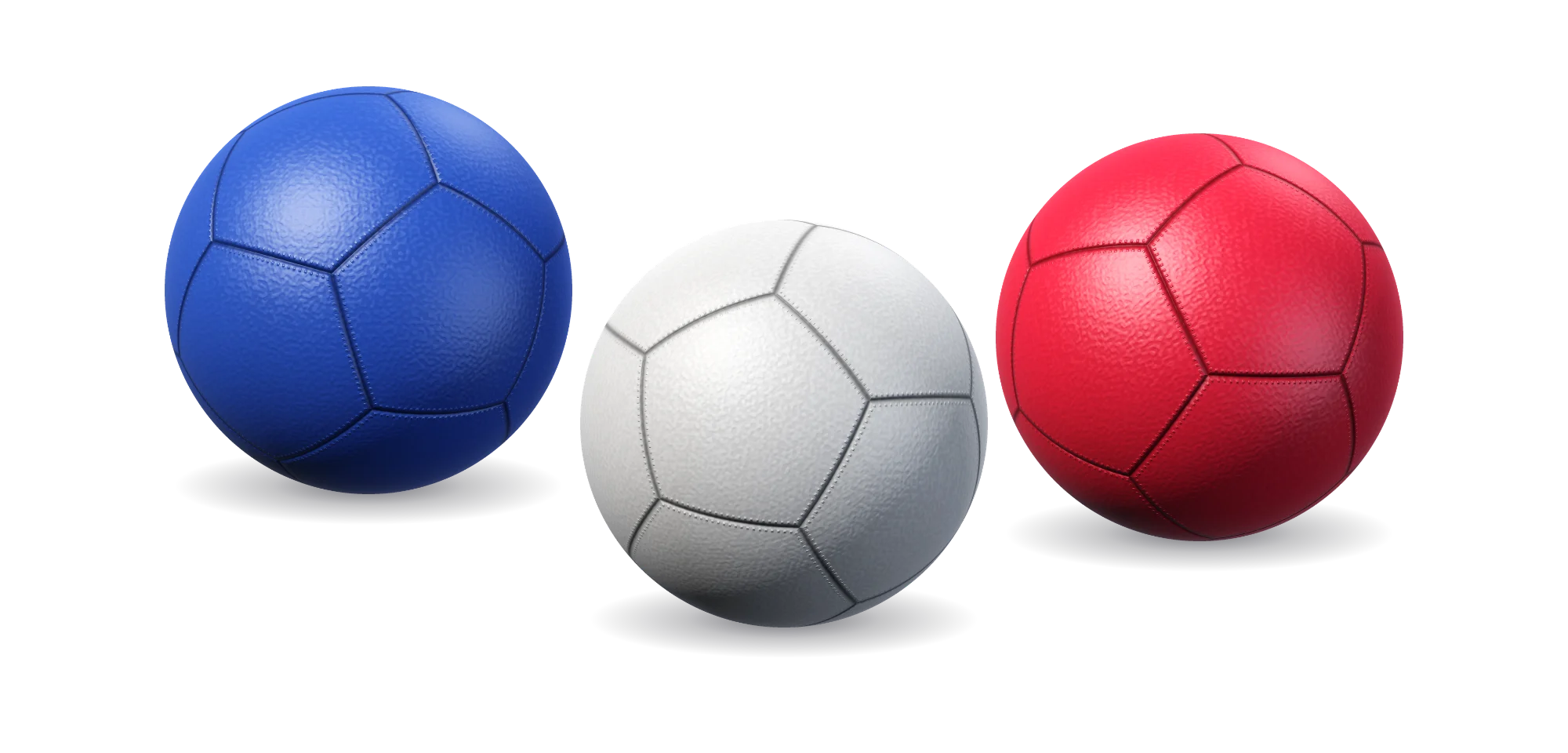
Three leather boccia balls of the same size: blue, white and red, on a navy background
First things first

Every ball has a job.

Your choice of balls shapes how a match unfolds.
It depends on what you want to achieve.

Knock out

Knock away a well-placed opposing ball.

Play long

Roll a ball all the way to the back of the court.
A long-game shot.

Block

Position a strategic ball that is hard to move.
A defensive shot.

Throw well

Use the texture the athlete finds best suited to an optimal throw.
A placing shot.

As many options as there are game situations.
Here is how to choose well.

1 / 6

Three balls. Three roles.

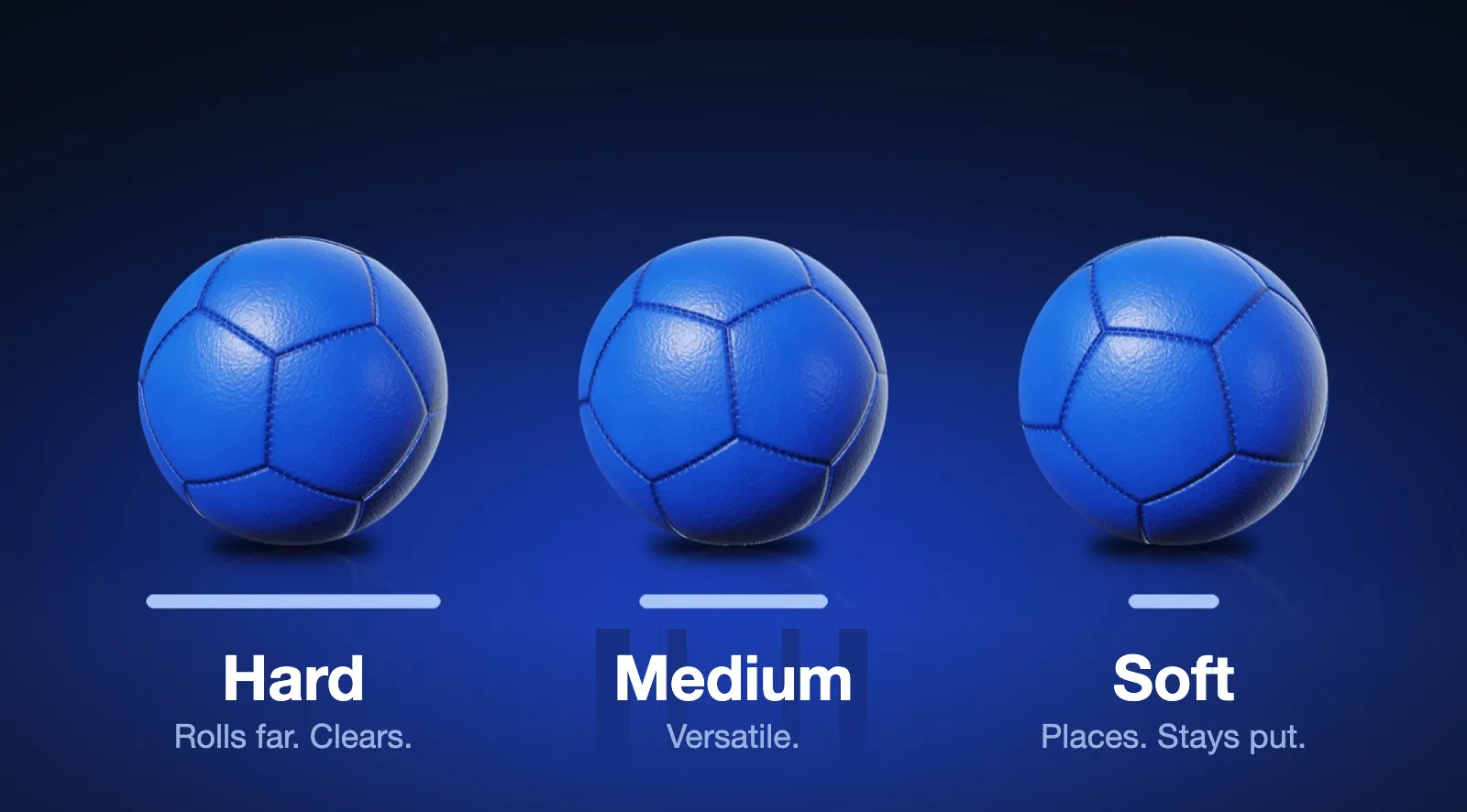
All boccia balls look alike. Yet they don’t behave the same. The difference lies in their hardness, in other words their density: it determines how far the ball rolls, and how easily the opponent can move it.
Three blue boccia balls: the hard ball rolls far and dislodges, the medium ball is versatile, the soft ball places and stays put
It dislodges

Hard

It rolls far and keeps its power. It is used to knock out an opposing ball, to open up play or widen the scoring area. It can also roll all the way to the back of the court.
It adapts

Medium

Versatile, it suits most game situations.
It places

Soft

It rolls very little. It settles close to the jack and becomes hard for the opponent to dislodge. It is a good placing ball.
Key takeaway
There is no best ball: each one has its role, and a complete set combines them.

Choose a ball for what it does.
Not for how it feels.

In the hand, one ball may seem better suited than another because it is a little softer or a little harder. On the court, only its job matters. From then on, it is up to you to master it: to knock out, choose your hardest balls, and to place, go for your softest balls.
2 / 6

It’s not your level that decides.

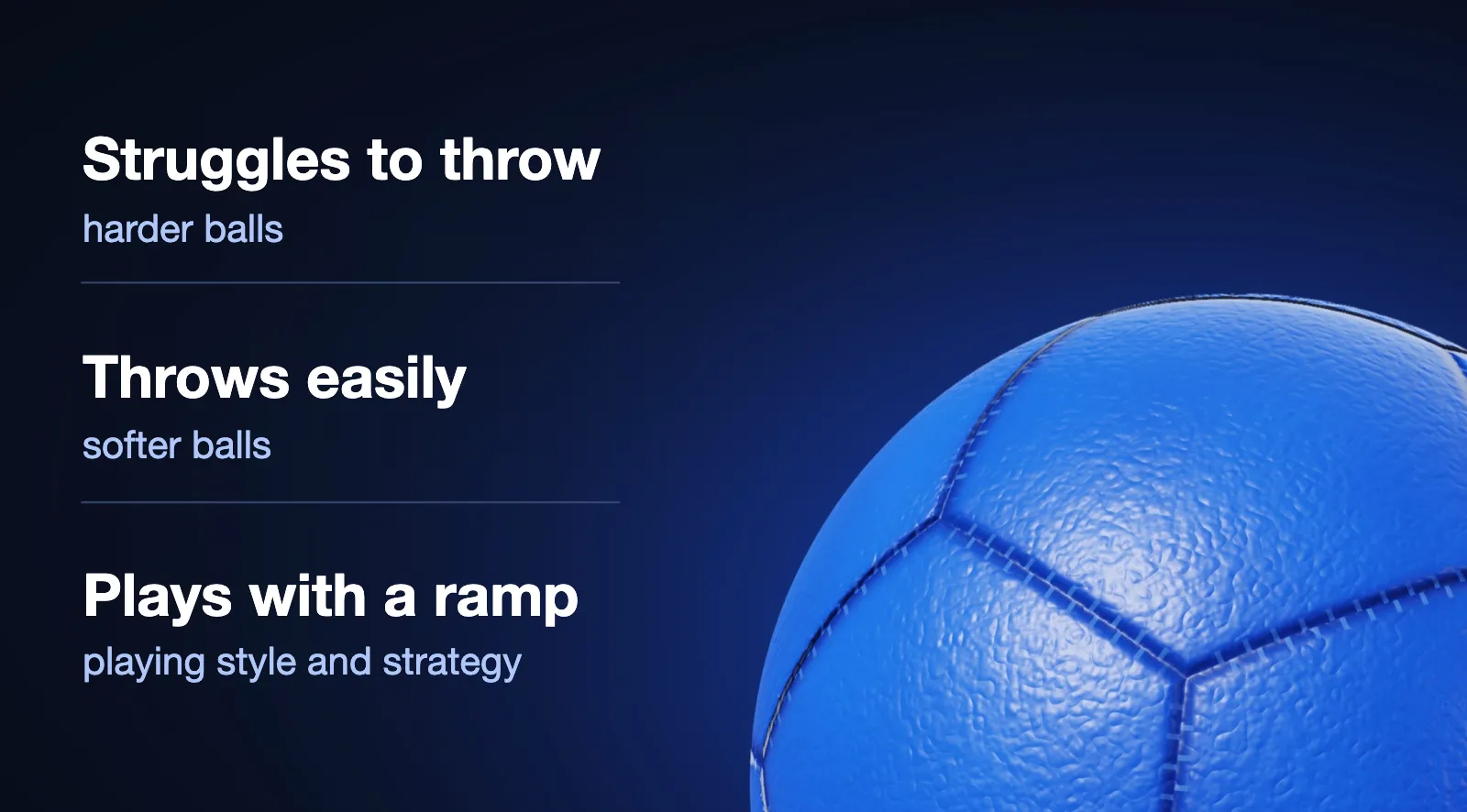
People often think beginners play with soft balls and experienced players with hard ones. In reality, the right choice depends mainly on your throwing ability.
Choosing hardness by player: struggles to throw, harder balls, throws easily, softer balls, plays with a ramp, playing style and strategy
You struggle to throw

Harder balls

They keep their energy and travel further.
You throw easily

Softer balls

They are ideal for placing.
You play with a ramp

Your style and your strategy

Distance is set with the ramp. Your playing style and your strategy guide the choice.
Key takeaway
The more your throwing ability develops, the more useful soft balls become.
3 / 6

The throw test.

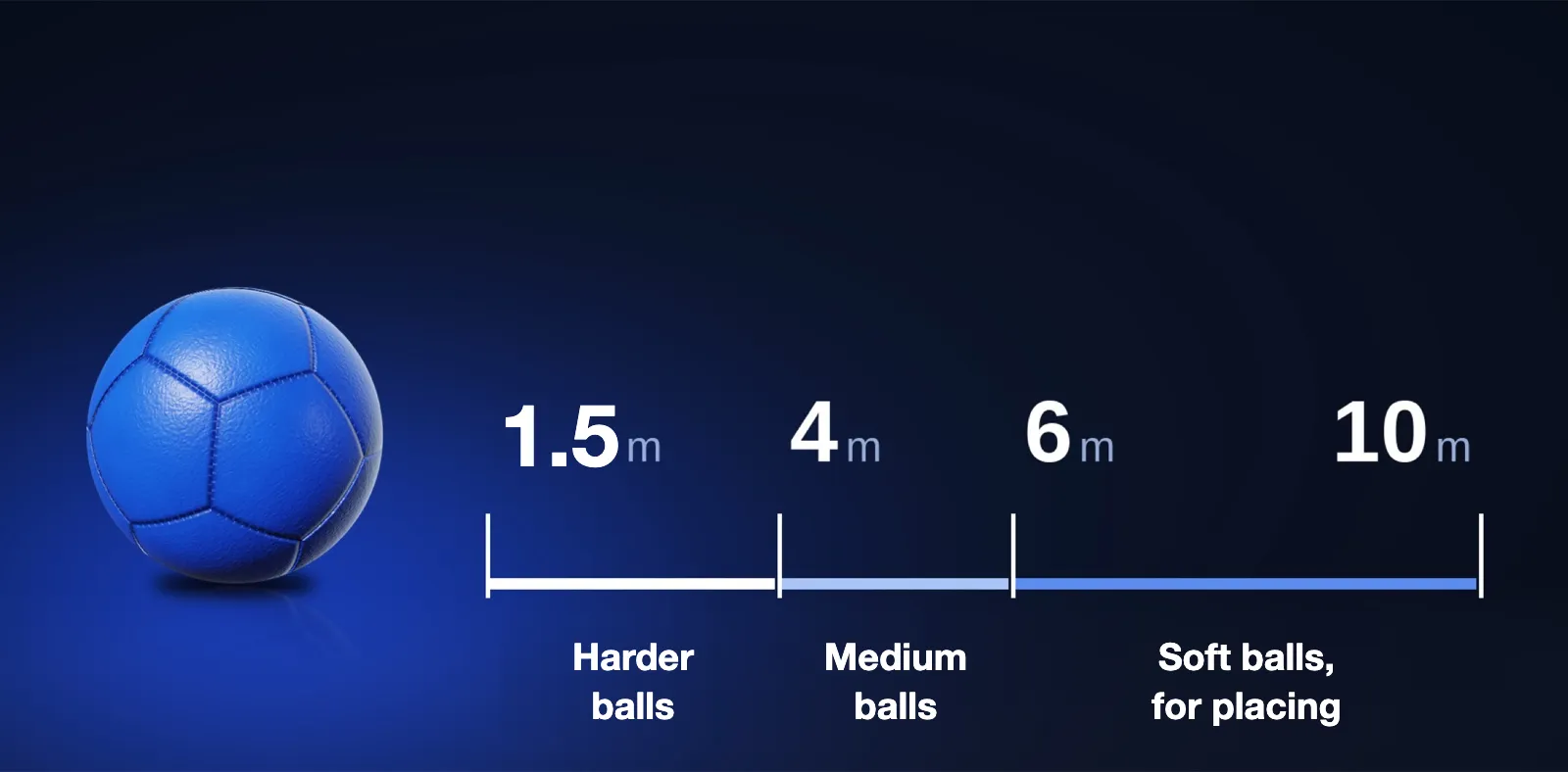
For players who throw by hand: measure your throwing distance with a medium ball. Three steps are all it takes.
Playing distance with a medium ball: 1.5 to 4 m, harder balls, 4 to 6 m, medium balls, 6 to 10 m, soft balls for placing
Step 1

Throw

Throw a medium ball several times.
Step 2

Measure

Note the maximum distance reached.
Step 3

Find your range

  • 1.5 to 4 m: hard balls will help you go further.
  • 4 to 6 m: medium balls, versatile, to get started.
  • 6 to 10 m: you can move towards soft balls, for placing.
Key takeaway
It’s a starting point, not a rule. You then fine-tune with experience and with your coach.
In detail

The profile of each hardness.

To go further, here is the profile of each family of balls and how to develop your game. For an advanced player, the choice is made with their coach, according to their potential, playing preferences and tactical goals.
High density

Hard balls

From “Medium-hard” to “Super hard”
  • Dense balls that roll, travelling fast and far.
  • For shooting, moving and knocking out the opponent’s balls.
  • For players who throw by hand and find throwing difficult.
  • For players who cannot throw a Medium ball beyond 4 metres.
Progression
As the player’s physical throwing ability develops, it is advisable to move them towards softer balls.
Medium density

Medium balls

From “Soft” to “Medium”
  • Intermediate in density and versatile in play.
  • They suit most game situations.
  • Recommended for beginners.
  • For players who throw by hand and send a Medium ball 4 to 6 metres.
Progression
As the player progresses, they vary their game with balls of different hardnesses: Soft and Hard.
Low density

Soft balls

“Supersoft”
  • Placing balls, slow, for a short game.
  • A bigger impact on landing: they grip the court.
  • For players who throw by hand and send a Medium ball beyond 6 metres.
  • From improving to experienced players.
Progression
As the player progresses, they vary their game and strategy with balls of different hardnesses: Medium and Hard.
4 / 6

Your first set.

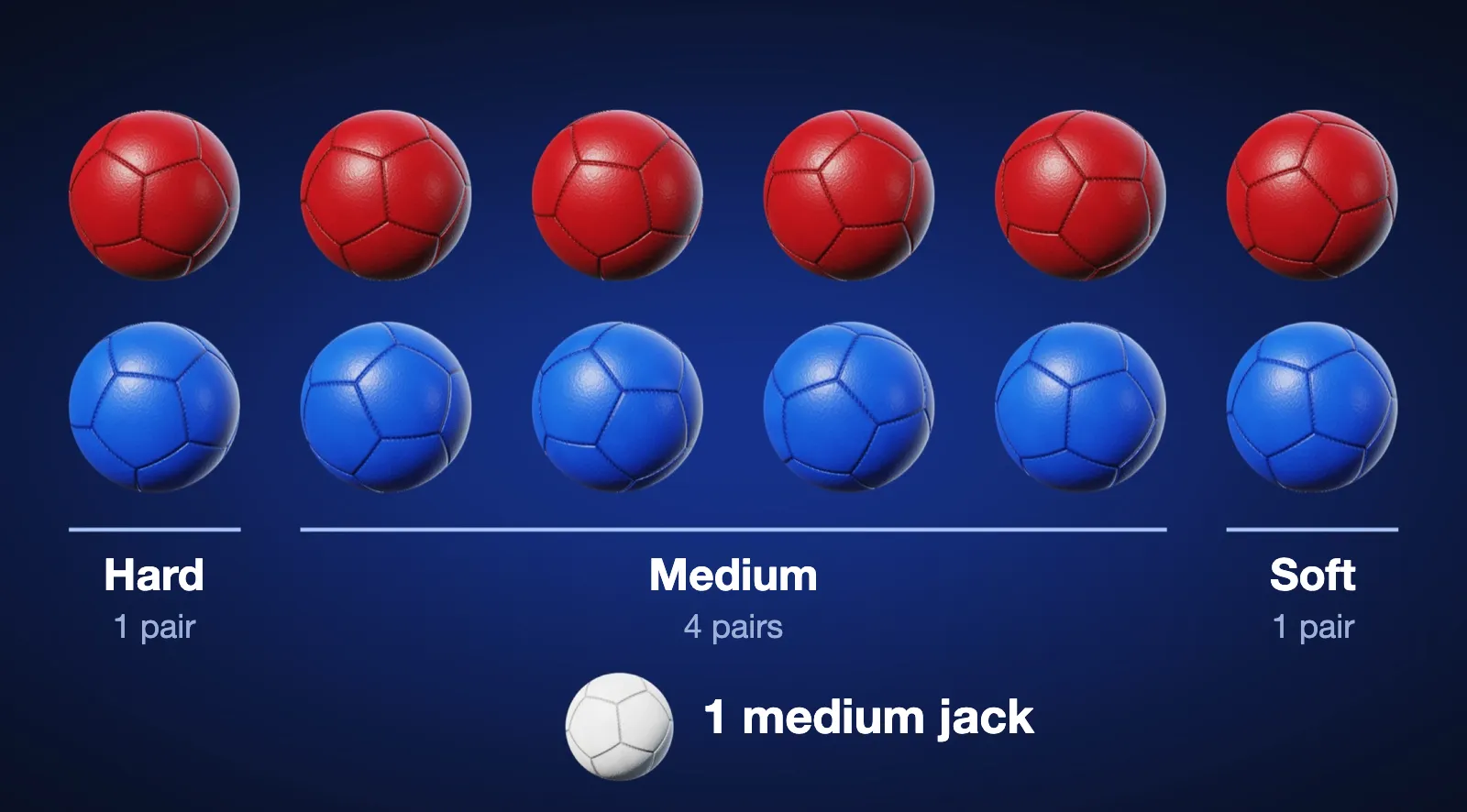
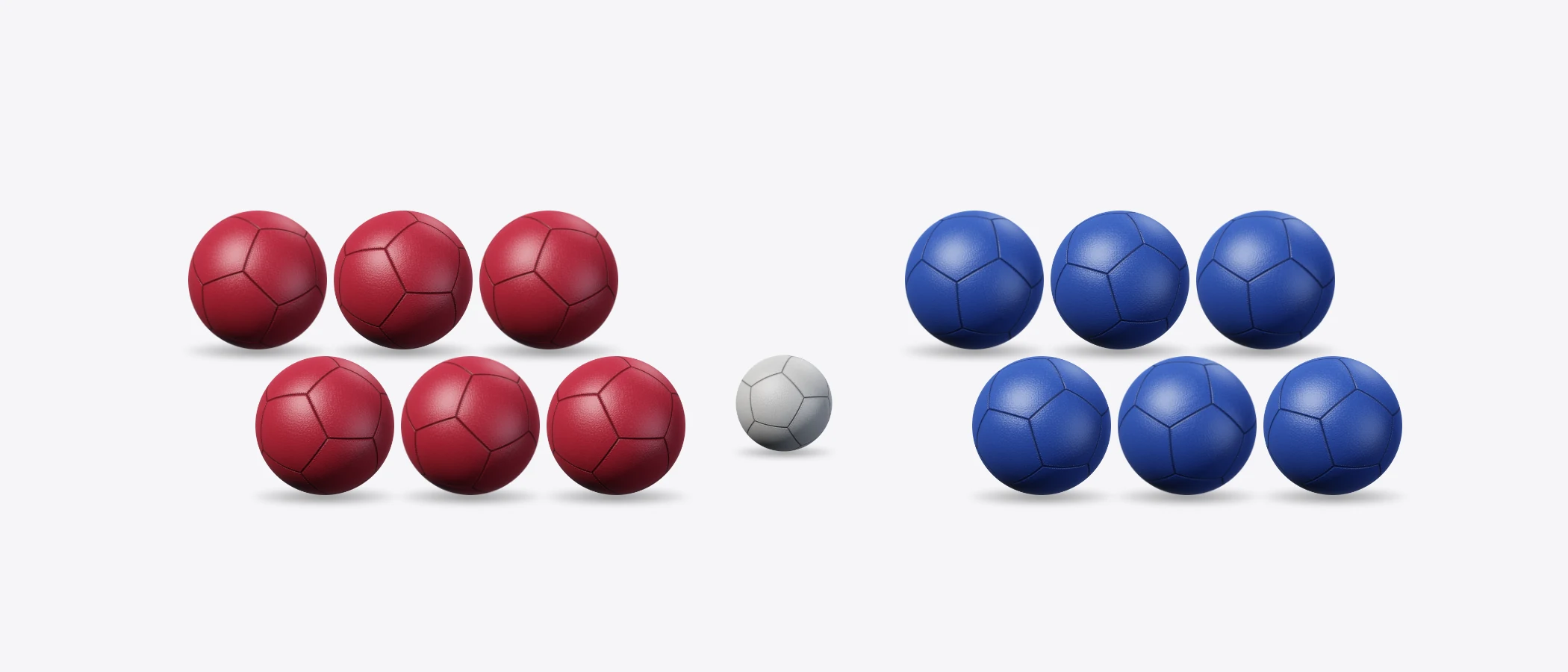
A boccia set has 13 balls: 6 pairs, each with one red and one blue ball of the same hardness, plus a jack. The right first set depends on your experience.
New to boccia

A single-hardness set

One hardness to build experience and get to know your balls. Medium balls, which are versatile, are recommended for beginners.
Already playing

The default mixed set

You know how to use several hardnesses and this is your first set? We suggest the composition below.
Default composition of a mixed first boccia set: 1 pair of hard balls, 4 pairs of medium balls, 1 pair of soft balls and 1 medium jack
1 pair

Hard balls

To knock out an opposing ball sitting against the jack or in your line of play.
4 pairs

Medium balls

For around 80% of game situations.
1 pair

Soft balls

To place your first ball close to the jack.
1 jack

Medium jack

Rolls more: easy to place, but easier for the opponent to move. A soft jack is more stable, but needs more power to send it far.
Key takeaway
Then adapt the composition to your style, but always keep at least one hard ball so you can clear.
5 / 6

Three hardnesses first. The nuances later.

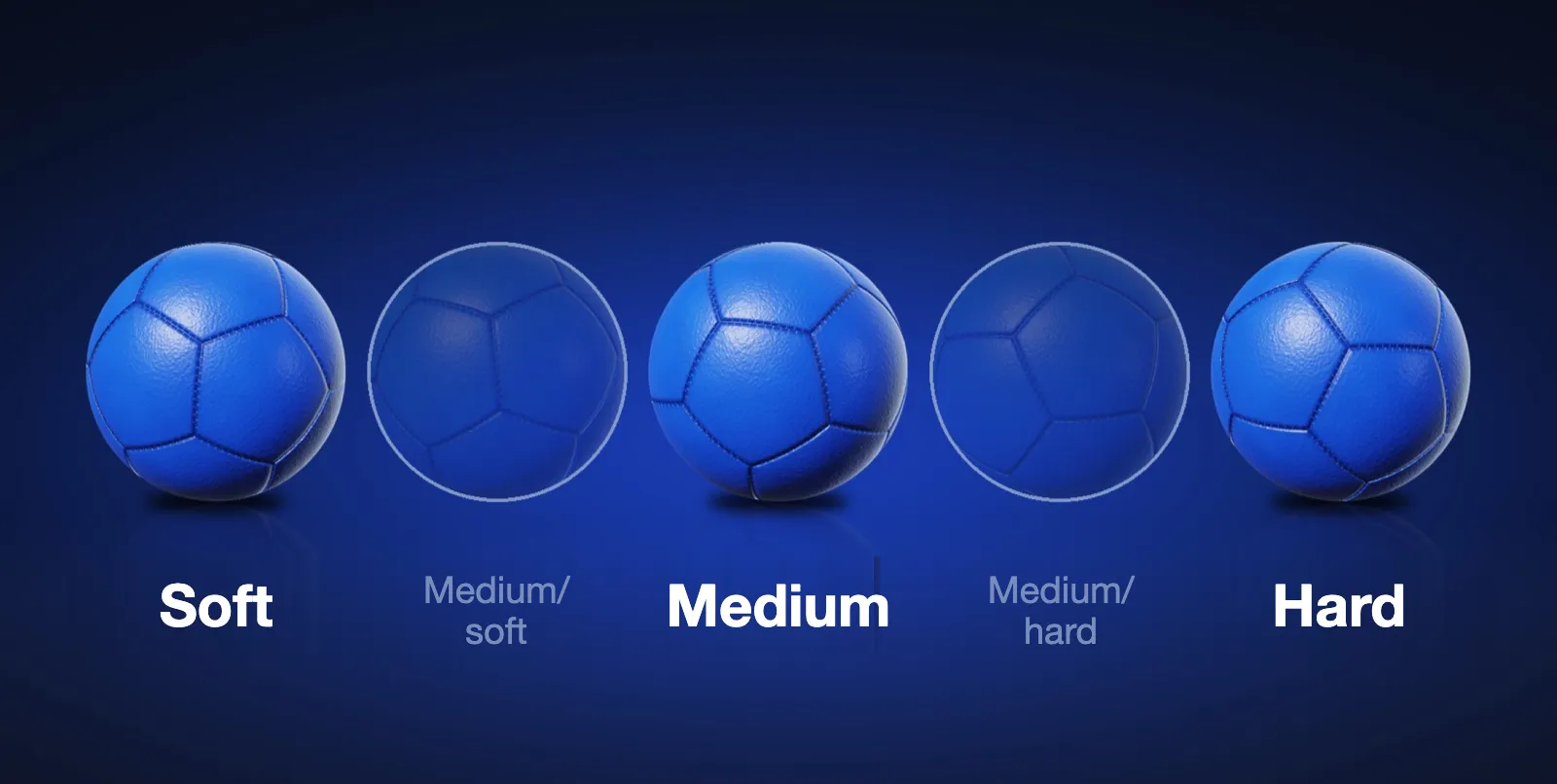
Between two hardnesses there are half hardnesses: medium/soft and medium/hard. They are very close to their neighbours.
Boccia hardness scale: soft, medium/soft, medium, medium/hard, hard
Who for?

Experienced players

Those who can feel these nuances and make use of them.
In a first set

Not yet

Mixing them with neighbouring densities makes learning harder: you no longer know which ball to choose for each situation.
Later on

As single balls

You can add a half hardness as a single ball, to complete your set and look for a precise nuance.
Key takeaway
Start with clearly distinct hardnesses: hard, medium, soft.
6 / 6

A new ball needs breaking in.

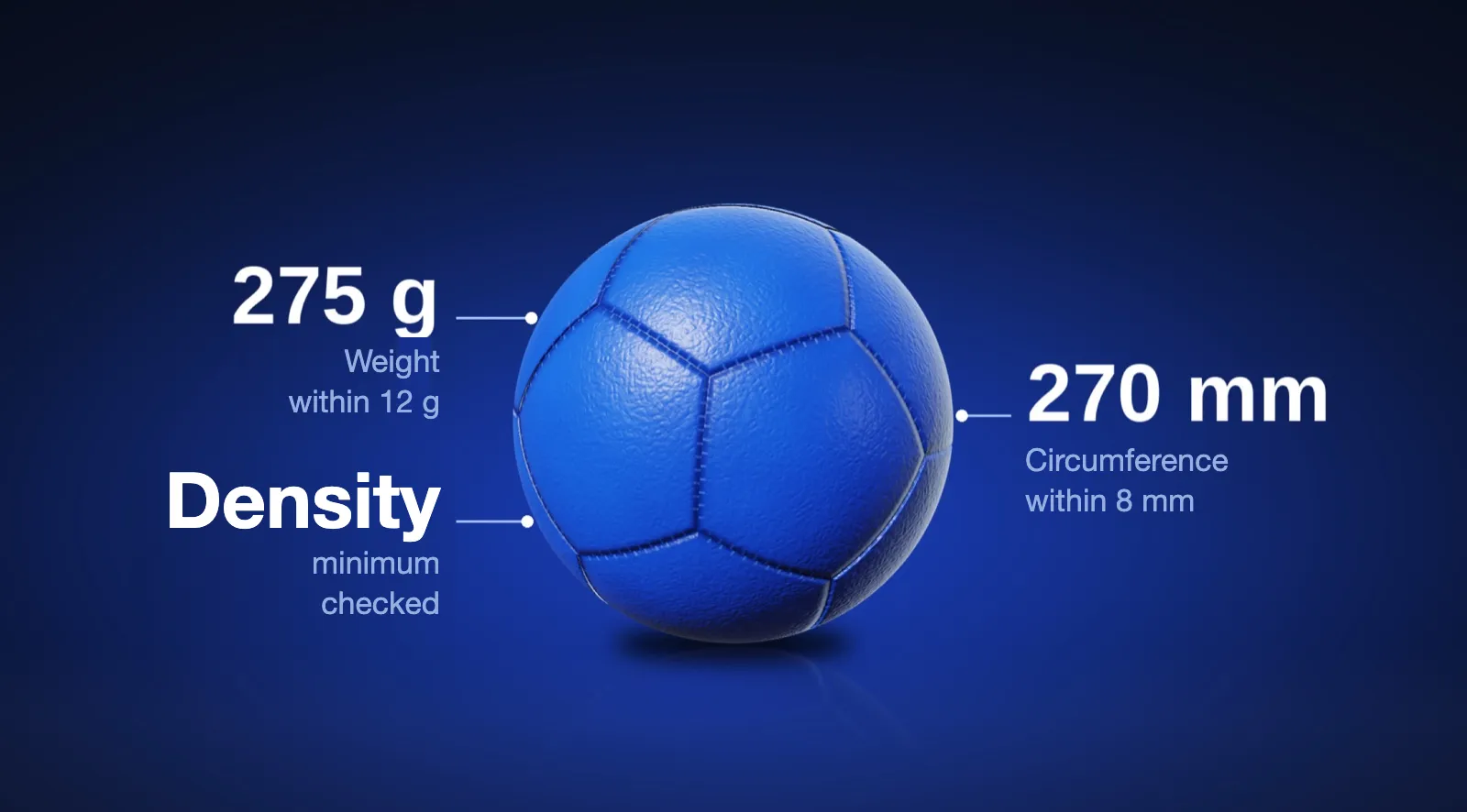
A new ball is rarely perfectly round and even. For the thirteen balls of a set to roll and bounce consistently, they need to be worked until they are broken in.
With your order, we will include our advice to help you get the most out of your new balls.
Checking a boccia ball: weight 275 g within 12 g, circumference 270 mm within 8 mm, minimum density checked
With use

It softens

The ball softens with use, whatever the brand.
No going back

Aim right

A softened ball never regains its original hardness: aim for the hardness you want, or slightly harder.
Before dispatch

We check

The weight, circumference and minimum density of every ball.
Before a competition

Test your set

Test and work your set: every ball, jack included, must roll and bounce straight.
The right mindset

Don’t wait for the perfect ball. Make every ball the right one.

Handmade, two balls of the same density can vary slightly depending on the brand or how they are stored. That’s normal. Get to know them, work them: it is up to you to take them where your game needs them.
Key takeaway
A new set is tested and worked before competition.
Complete boccia set: 6 red balls, 6 blue balls and the white jack
Getting started

A dedicated set for each player

Giving a player their own set of balls lets them make it theirs, get to know it and get used to it. They work on the effects of their balls and progress faster.
For coaches
Chasing performance with a new, and therefore inconsistent, set can put a player in difficulty, or even lead to failure, whether they are a beginner, improving or experienced. Test the set yourself, watch how each ball behaves and check that every one, jack included, rolls and bounces straight. If you don’t enjoy playing with it, neither will your player.
With your order, we will include our advice to help you get the most out of your new balls.
The ranges

From leisure to the top level.

Three families of balls support the player, from discovery to international championships.
Three leather boccia balls: one blue, one red and the white jack
The essentials

Getting started on a budget

Sets of 13 medium leather balls, with a medium jack.
  • Black Serie: the most affordable range, with a surprisingly smooth roll. For leisure play.
  • Standard: balls approved for competition, ideal for your first tournaments.
Sold as complete sets only.
See the essentials
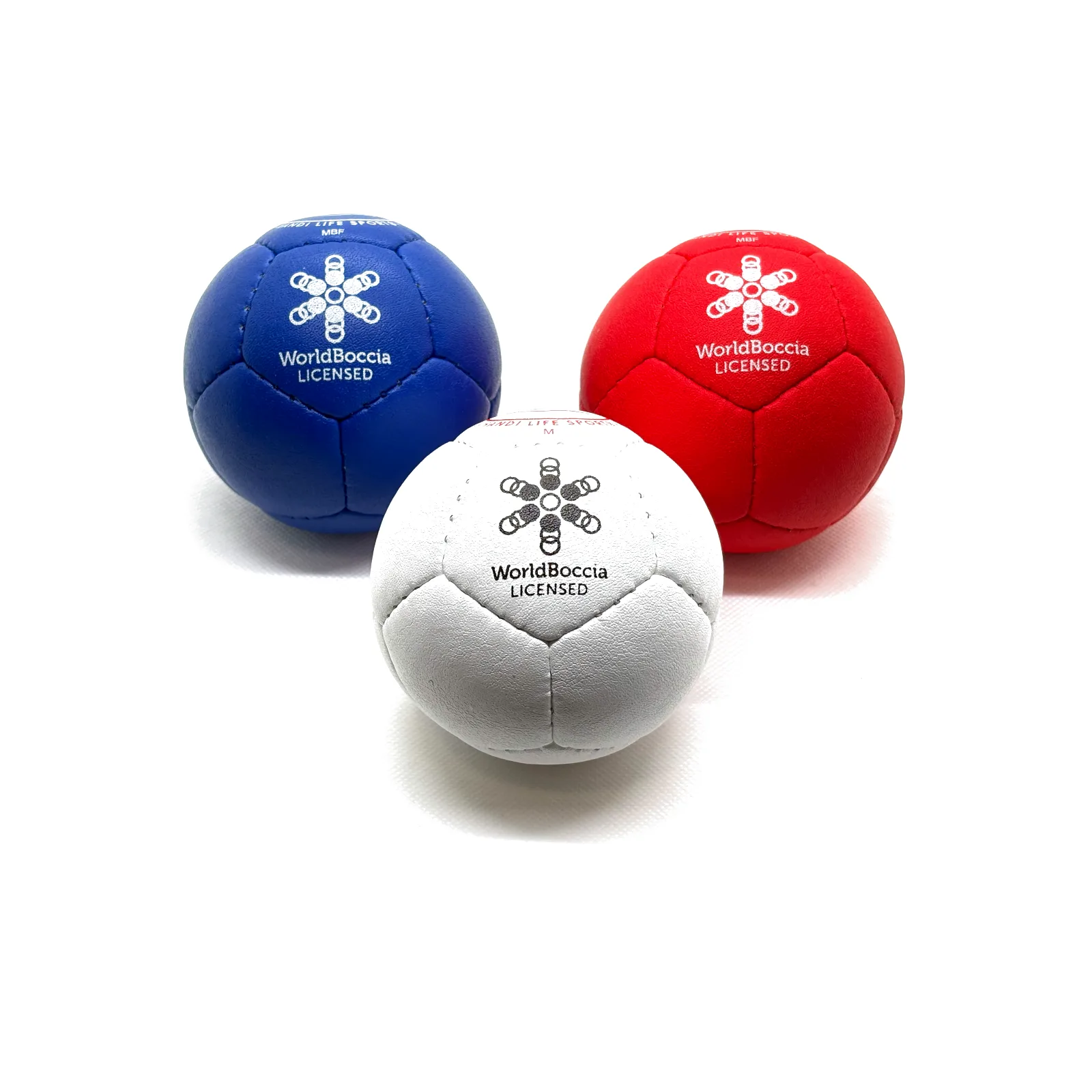
Superior leather boccia balls: one blue, one red and the white jack
Superior

Every hardness for competition

A set of 13 balls in a single hardness, with the container of your choice, or a set built pair by pair, in a soft bag or a hard container.
  • Classic: leather, from hard to supersoft. Perfect for tournaments, its reliability is proven by many years on the court.
  • Supersoft: a light, thick leather. A pair of Supersoft balls is always worth having in your set.
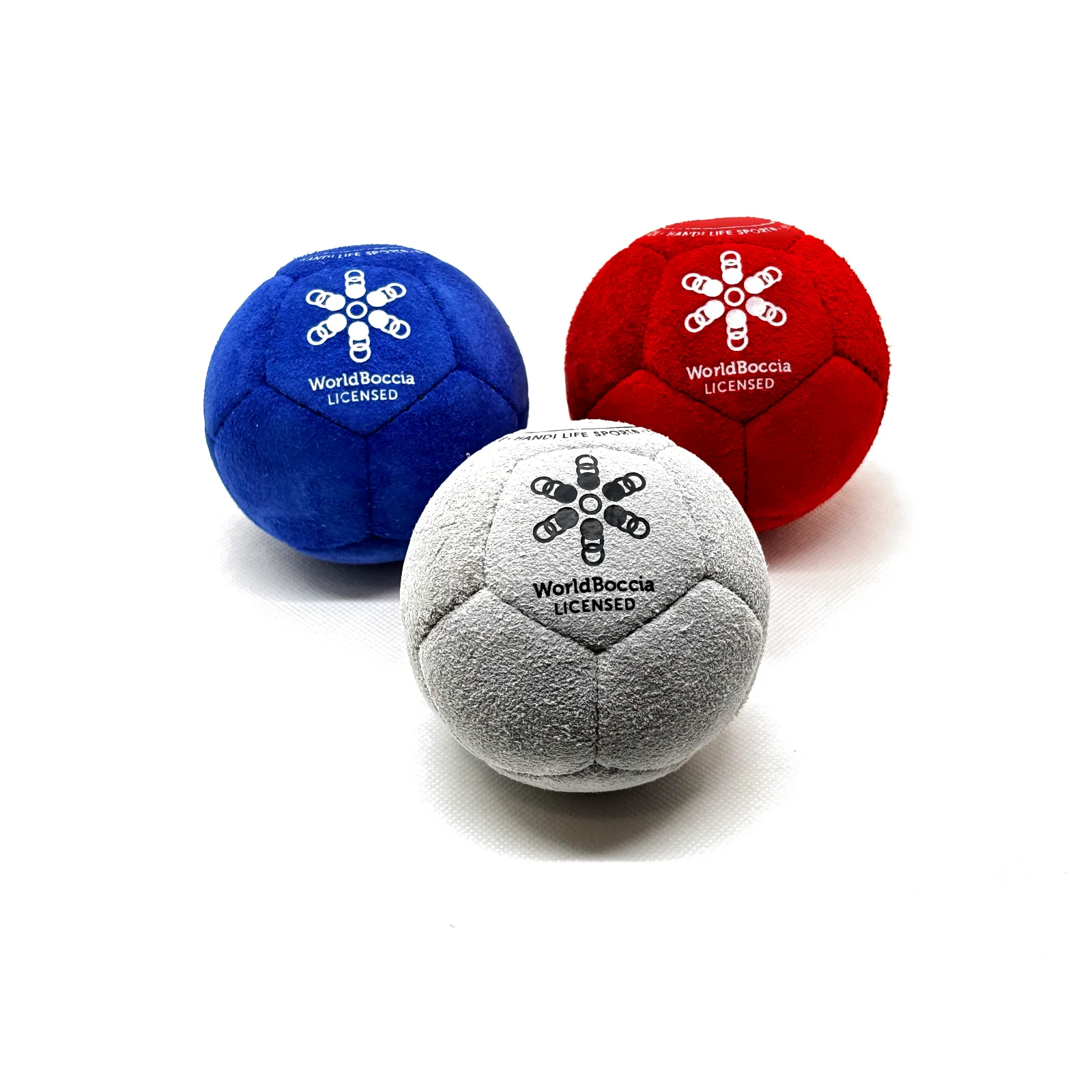
  • Suede: velvet, from hard to supersoft. Remarkable grip in the hand and on the floor, an easier throw and precision that can improve. The velvet also makes the ball harder for the opponent to move.
Jack in every hardness. Competition. Single balls.
See Superior sets
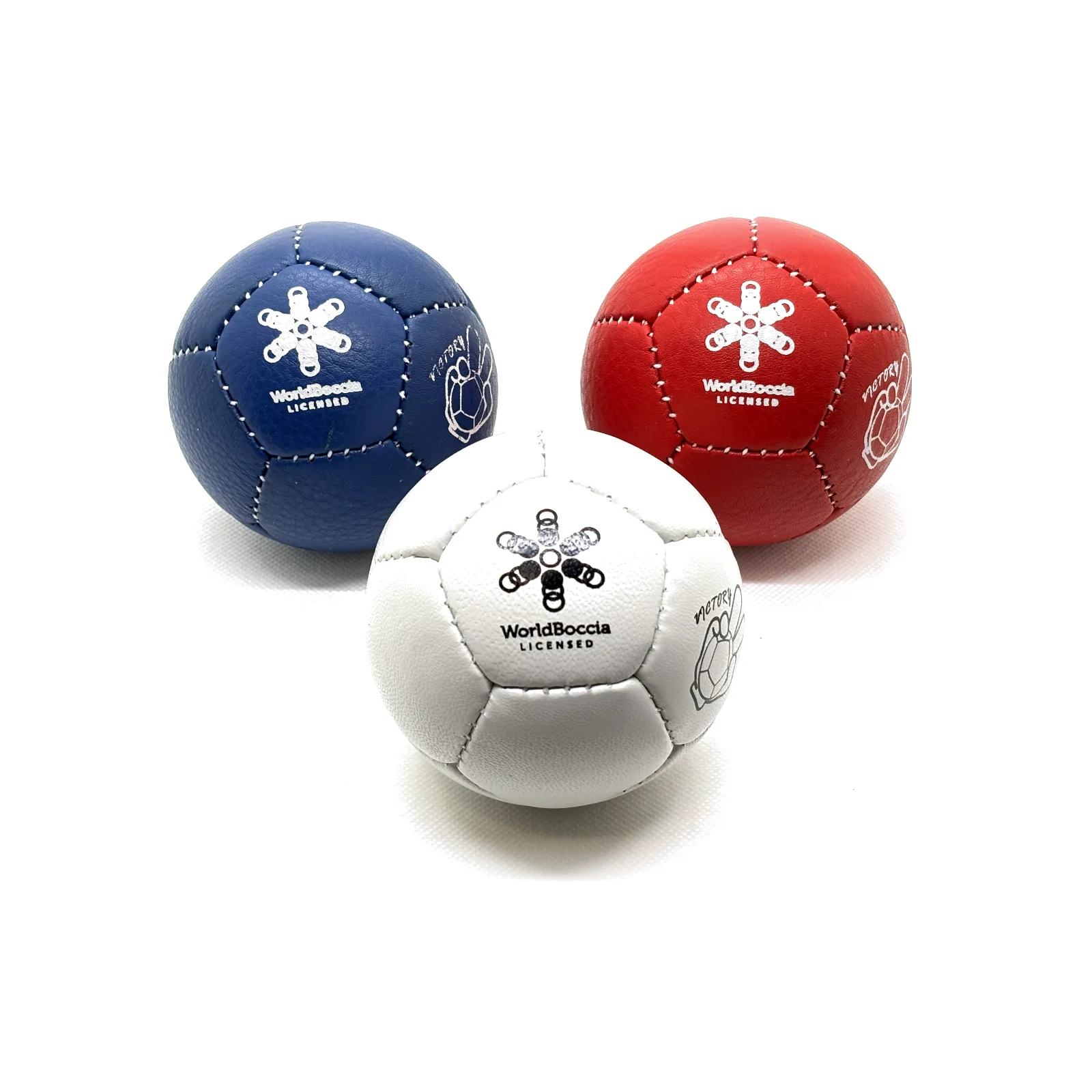
Victory leather boccia balls: one blue, one red and the white jack
Victory

For advanced competitors

Elite balls in leather or velvet, recognised for their reliability and consistency by players at the highest level. For ramp or hand play, a safe bet at international championships. Set of 13 balls of your choice, with a soft bag.
  • Ramp (BC3), leather: super hard, hard, medium, medium/soft, soft and super soft. A marker dot helps orient each ball on the ramp (not on jacks).
  • Throwing, leather: hard, medium, medium/soft, soft and super soft.
  • Velvet: soft only. Offered by default to throwing players, they also suit ramp players (BC3), but have no marker dot to orient the ball on the ramp.
Medium or soft jack.
Competition. Single balls.
See Victory sets
Single balls
To complete an existing set or add a half hardness, Superior and Victory balls are also available individually.
See single balls
Finish

Cover, colour, handmade.

After hardness, other features set one boccia ball apart from another.
The feel

The cover

Balls have traditionally been made of leather, but velvet or cork can also be seen on court. The thickness and grain of the leather give a more or less refined feel. Velvet gives the ball formidable grip. A smoother surface gives an extremely consistent trajectory, ideal for ramp play or foot play.
Superior leather boccia balls, blue, red and white jack
Superior velvet boccia balls, blue, red and white jack
The marker

The colour

Balls must be red and blue, and the jack is white. Some ranges are darker than others, with no effect at all on play. It even helps you spot your balls faster during a match.
A unique ball

Handmade

A boccia ball is a little gem, largely made by hand. Differences in shade, a few manufacturing marks or lines, or tiny irregularities in the stitching are possible, with no effect at all on play.
The only criteria that count are the compliance criteria set by BISFed, which we check before every dispatch: weight, circumference and minimum density. If your balls aren’t perfectly perfect, it’s proof they were made by hand, with love.
Storage and engraving

Carry and personalise your balls.

Dark blue

Soft bag

A handle and a shoulder strap to carry your balls easily while keeping to your budget. The balls are in contact with one another.
Dark blue

Hard case

A handle and a shoulder strap. Inside, two rigid shells protect a complete set, with a storage pocket and 13 individual slots. Light and easy to store.
Red

Hard backpack

A handle and a pair of shoulder straps. Inside, two rigid shells protect a complete set, with a storage pocket and 13 individual slots. Light and easy to store.
Examples of single-colour engravings on red and blue boccia balls
Engraving

Your initials or your logo, engraved.

An engraving lets you add a small logo or initials to your balls. The finish is single-colour and the marking permanent. Contact us to personalise your balls.
Summary

At a glance.

The six key points for choosing your balls and building your set.
1 / 6

Three roles

Hard: it knocks out.
Medium: it is versatile.
Soft: it places.
2 / 6

Throwing ability

It guides the choice of hardness, not the player’s level.
3 / 6

The throw test

1.5 to 4 m: hard balls.
4 to 6 m: medium balls.
6 to 10 m: soft balls.
4 / 6

Your first set

Beginner: a single hardness.
Player already using several hardnesses: 1 hard pair, 4 medium pairs, 1 soft pair and 1 medium jack.
5 / 6

Half hardnesses

Add them later, as single balls.
6 / 6

Breaking in

Aim for the hardness you want, or slightly harder.
Three leather boccia balls of the same size: blue, white and red
Not sure?

Let’s build your set together.

Tell us how you play, by hand or with a ramp, the distance you reach with a medium ball and how you practise.
We will help you build your set, pair by pair.
Write to us
Sport has no borders. Neither does Actinomie.

Copyright © 2026 Actinomie | All rights reserved | Siren : 891 566 085

envelopecartlaptopgift linkedin facebook pinterest youtube rss twitter instagram facebook-blank rss-blank linkedin-blank pinterest youtube twitter instagram